Falling Snow and Motion
Photography is more than exposure — it’s interpretation.
The Quiet Power of Snow
There’s something almost sacred about photographing in falling snow.
The world slows down. Sounds fade. Movement becomes soft and deliberate.
Even the light feels different — scattered, diffused, gentle.
But here’s the thing: snow isn’t just background. It’s character.
How you choose to capture it — still or in motion — changes the entire story of the image.

There’s something almost sacred about photographing in falling snow.
The world slows down. Sounds fade. Movement becomes soft and deliberate.
Even the light feels different — scattered, diffused, gentle.
But here’s the thing: snow isn’t just background. It’s character.
How you choose to capture it — still or in motion — changes the entire story of the image.
That’s where the art comes in.
Choosing Between Stillness and Motion
When you shoot in falling snow, you’re not just recording what’s in front of you — you’re deciding how time feels.
A fast shutter freezes snowflakes midair. Each one sharp, tangible, almost suspended in silence. It gives a sense of peace and permanence — like the world has stopped just long enough to let you breathe.
A slower shutter, on the other hand, lets the snow streak softly through the frame. It paints motion across the stillness, turning the photo into something dreamlike. It’s not what your eyes see — it’s what your heart remembers.
The difference between those two images isn’t about technical skill. It’s about intention.
The Technical Freedom to Create
This is where shooting RAW earns its place.
Winter scenes are tricky — the light shifts constantly, and your camera’s meter wants to make snow gray. When you shoot RAW, you’re free to underexpose slightly to protect the highlights, keeping your shutter speeds high when needed. Later, you can lift the shadows in post without introducing noise or banding.
That flexibility lets you chase creativity in the field, not perfection. You can adapt to changing snow, varying light, and fleeting moments — and know you’ll have everything you need later to shape the image the way you envisioned it.
In other words: RAW gives you permission to take artistic risks.
Creativity Is the Art of Choice
Art doesn’t happen by accident. It’s the result of choices — often small, but deliberate.
When I photograph in snow, I’m not trying to “get it right.” I’m trying to be honest to what I felt in that moment.

Whatever it is, the way you tell your story with your image can make all the difference.
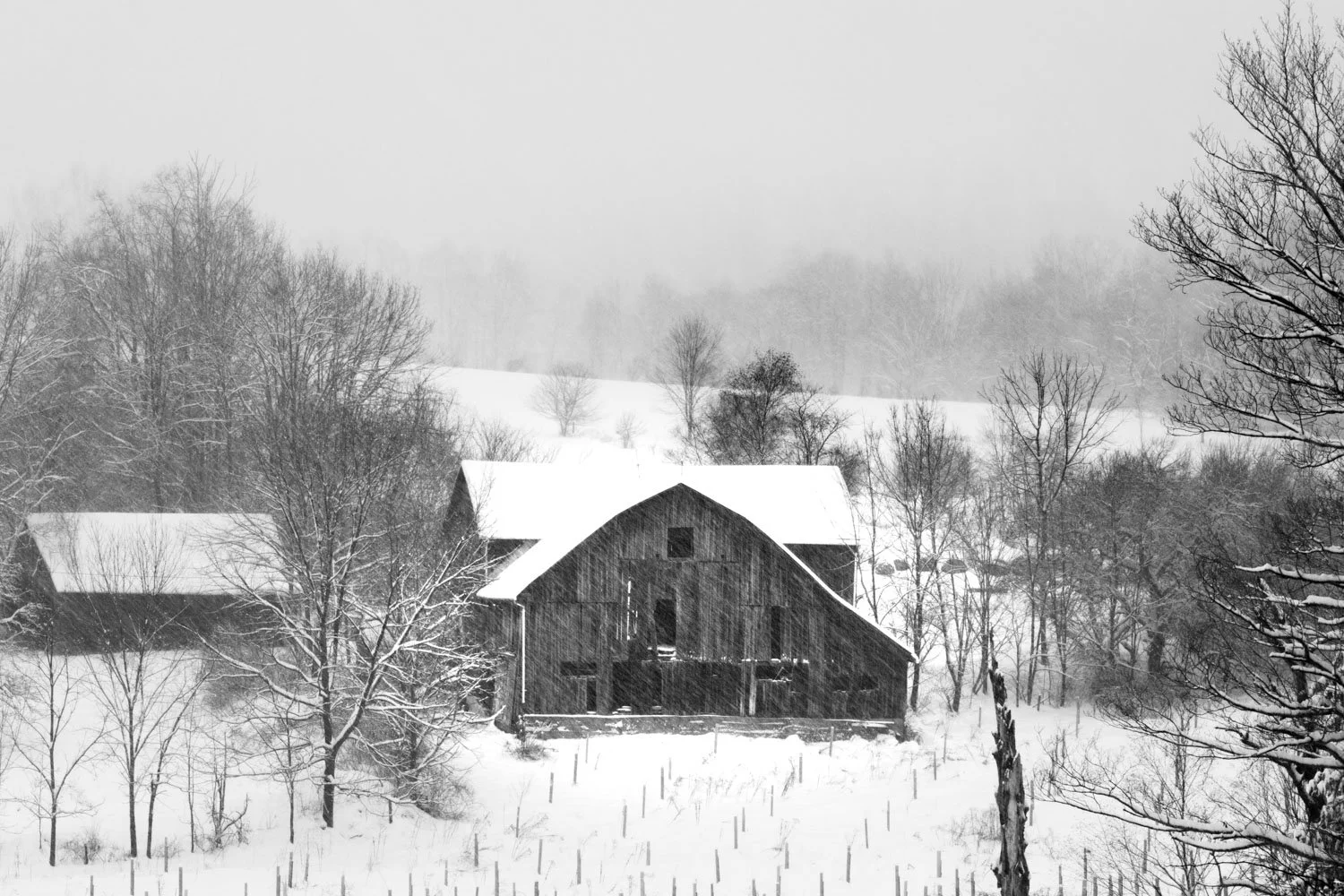
Sometimes that means silence — flakes frozen midair, time suspended.
quiet movement — streaks of snow whispering through the frame.
In the image to the left, the snow is streaking through the image ever so lightly. Noticed in the large print, not the small—artistic choice.
Both are true. Both are beautiful. And both are valid ways of seeing the same world.
The camera doesn’t make that decision — you do.
When Technique Serves Vision
Fast Shutter (1/250–1/500 sec): Perfect for clarity, isolation, and simplicity. Great for showing flakes as characters in the story.
Slow Shutter (1/30–1/60 sec): Ideal for mood, emotion, and atmosphere. The motion blur adds a painterly texture to the scene.
Low Flash Power: Enhances flakes close to the lens without flattening the background — but use it sparingly.
RAW Workflow: Underexpose slightly, then recover in post. You’ll preserve highlight detail in the snow and control tone and warmth later.
These aren’t “rules.” They’re tools. The difference between documentation and art is knowing when to use which.
The Artist’s Responsibility
Every time you press the shutter in a snowstorm, you’re defining what winter means to you.
Is it isolation? Serenity? Renewal? Motion? Quiet?
Snow gives you the canvas, but your choices paint the mood.
That’s why photography is more than recording light — it’s interpreting it.
Being creative and true to your vision is the real work. That’s where craft ends and art begins.
Final Thought
Make it stand out
When the snow starts to fall, don’t just reach for the settings you used last time.
Pause. Watch. Decide what the scene feels like.
Then shoot accordingly.
Because in the end, whether the snow stands still or drifts softly through your frame — what matters most is that it feels like you.