

The Infinite Horizon: Perspectives of the American West
The American West is a landscape of profound geologic permanence, yet its true character is revealed in the most impermanent of moments. This collection explores the vast, high-altitude vistas and rugged textures of the frontier, focusing on the brief windows where light and weather transform stone and sage into something ethereal. By documenting these intersections of monumental scale and transitory atmosphere, I aim to capture the enduring spirit of the West.
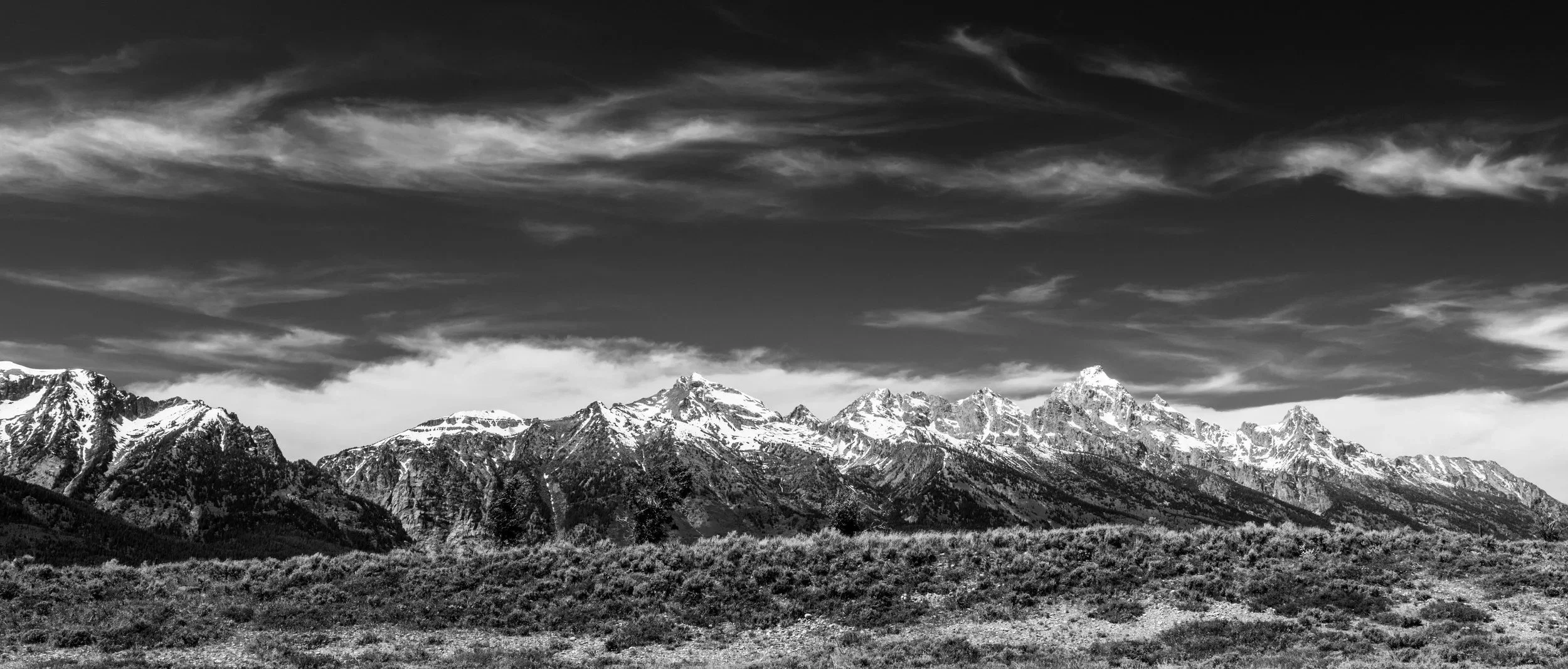
A panoramic black-and-white view of the Teton Range, its snow-capped peaks silhouetted against a turbulent sky of layered clouds.
The stillness of the foreground meadow contrasts with the implied motion of the atmosphere, suggesting a moment suspended between calm and impending change.
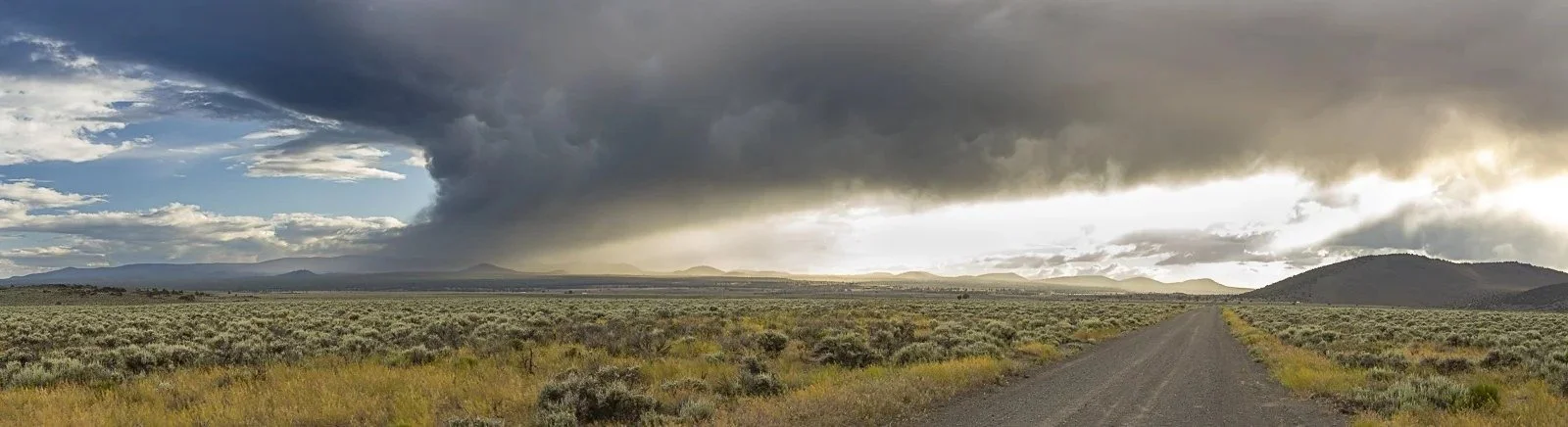
A gravel road cuts through a vast, sagebrush-studded plain as a massive, dark storm cloud looms overhead, its underside illuminated by a sliver of sun.
The tension between the gathering tempest and the fragile light creates a moment of suspended drama, where the land’s quiet endurance is underscored by the imminent arrival of weather.
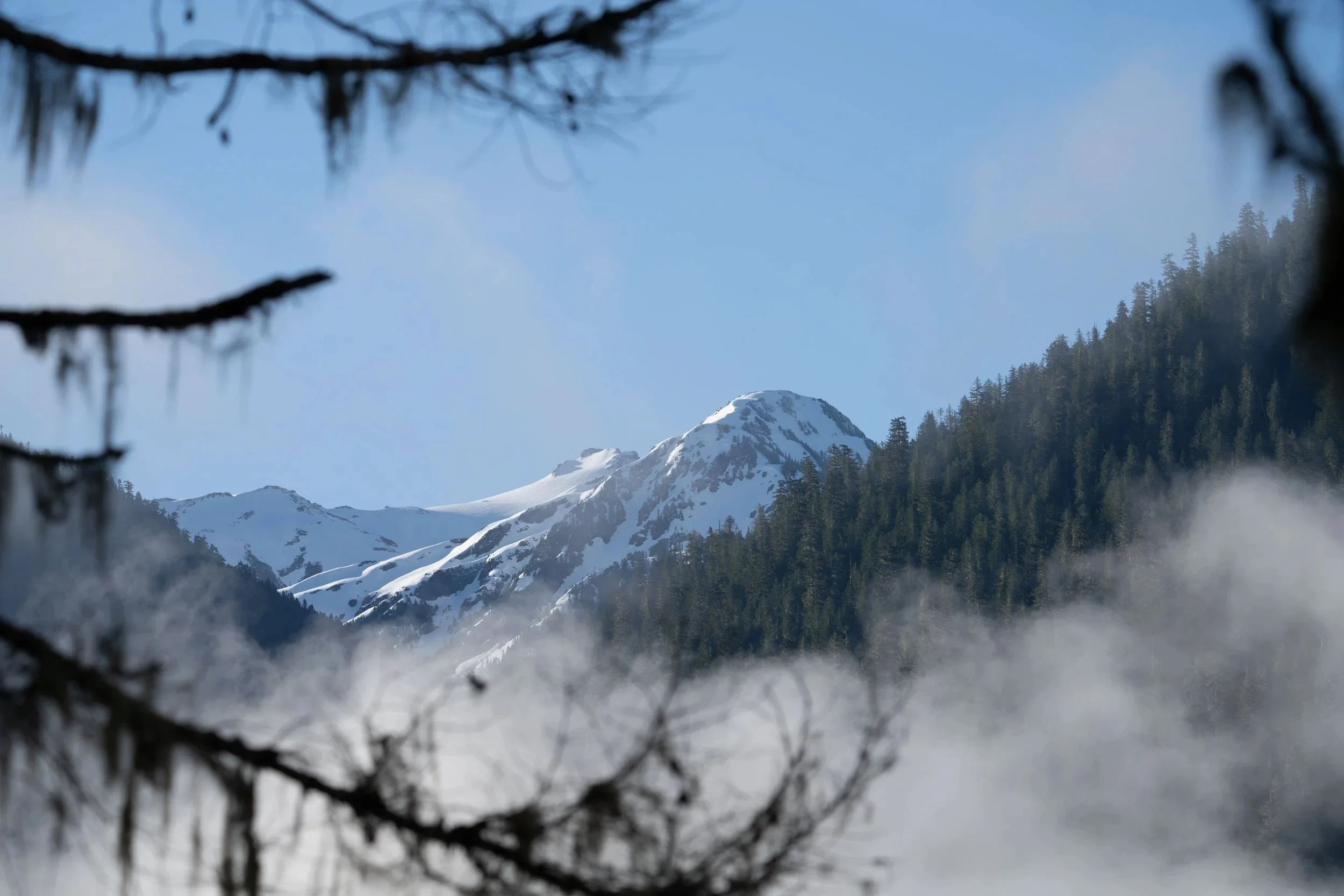
A snow-capped peak rises above a dense forest, partially obscured by low-lying mist that clings to the valley floor.
The foreground branches, draped with moss, frame the view like a natural lens, emphasizing the mountain’s isolation and the quiet, layered stillness of the alpine air.
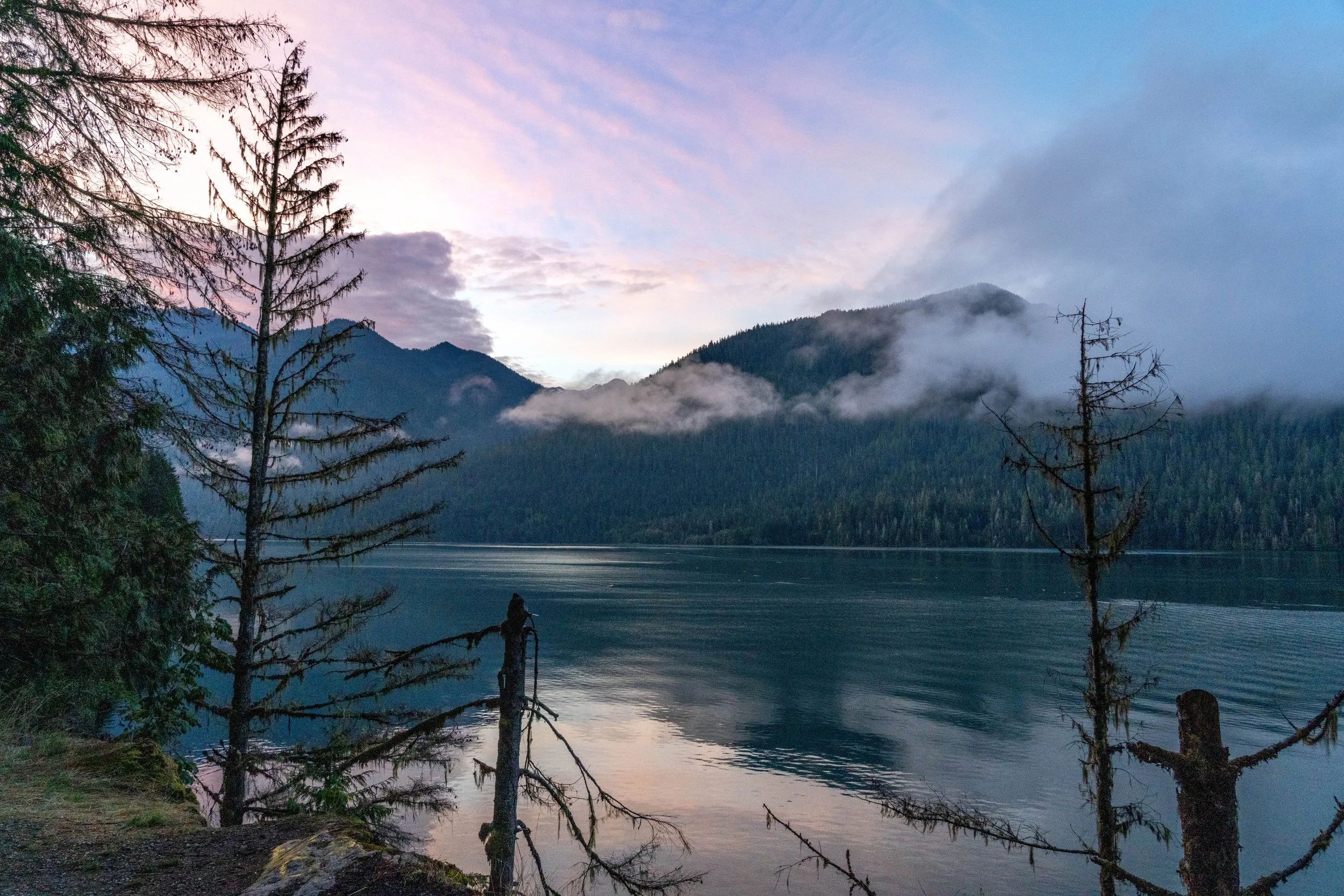
From a narrow lakeside vantage, skeletal trees frame a vast expanse of water reflecting dawn’s soft blush and cloud-wreathed mountains.
Mist clings to the forested ridges, deepening the quiet stillness between earth and sky.
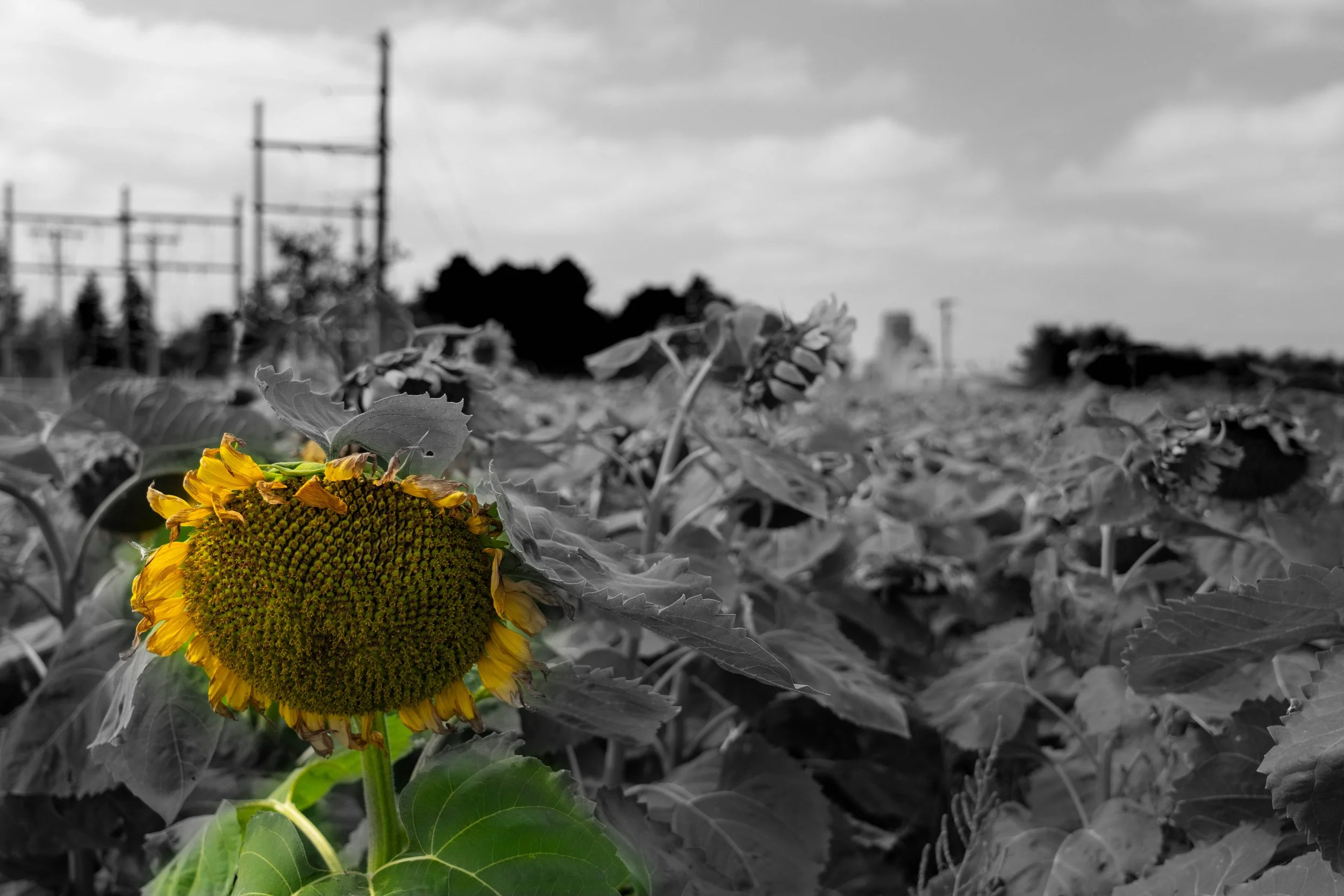
I stopped for this shot because the contrast hit me quickly — a bright, late-season sunflower standing in front of an aging power substation. Natural solar power in the foreground, old wired energy fading into the background. The selective color wasn’t just an effect; it was a way to make the metaphor visible. This one flower caught the light and held onto it while the rest of the field — and the infrastructure behind it — felt worn down. It was a simple moment, but it captured the shift from what powered us before to what might power us next.
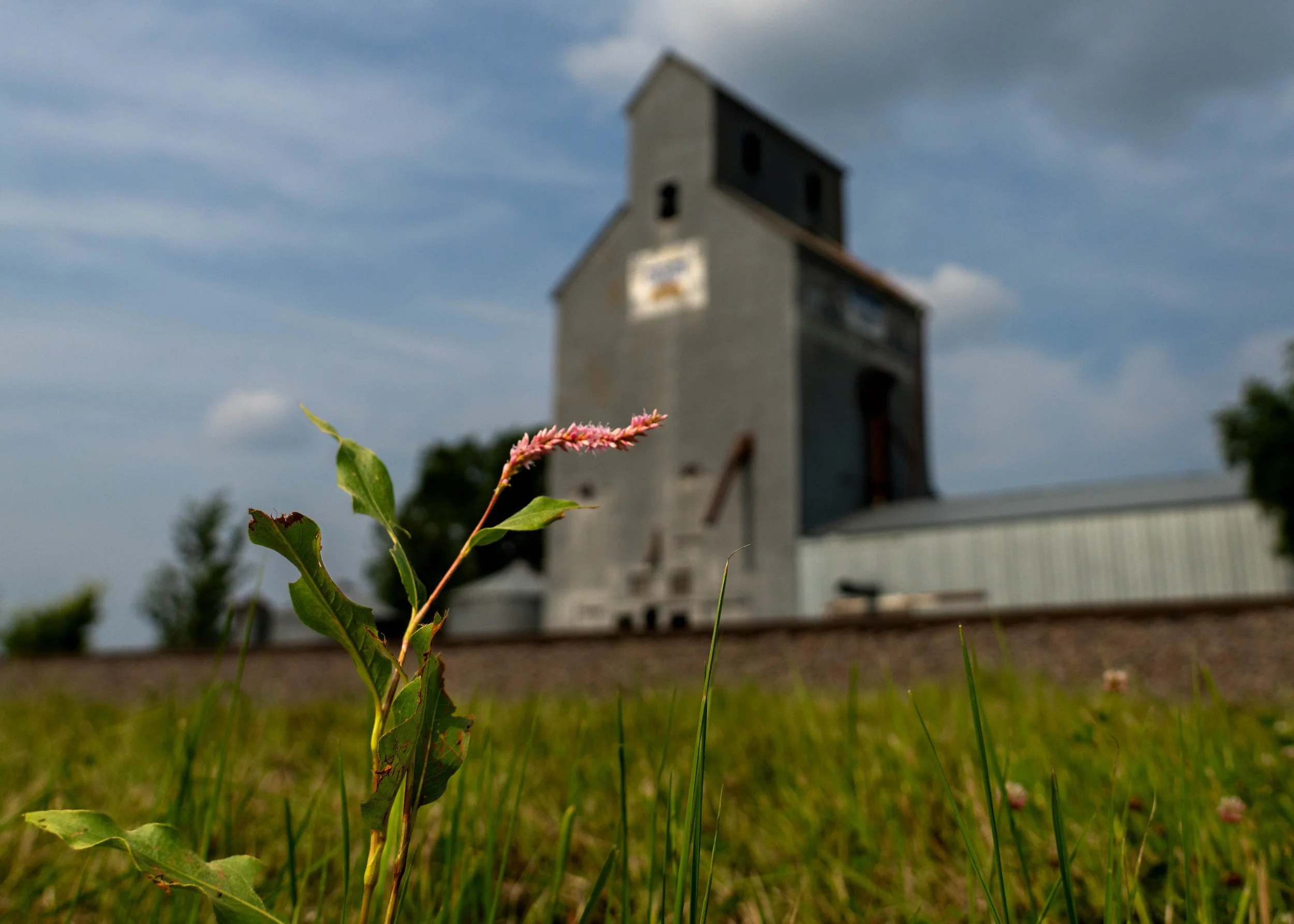
I took this shot because the contrast hit me immediately — this tiny, weathered wildflower pushing up through rough ground while the grain elevator loomed behind it. Most people look at the big structure first, but the small things at your feet usually tell the better story. The shallow depth of field lets the plant claim the frame, turning the elevator into context instead of the subject. It’s a simple moment, but it says a lot about resilience and the way life keeps showing up in places built for something else.
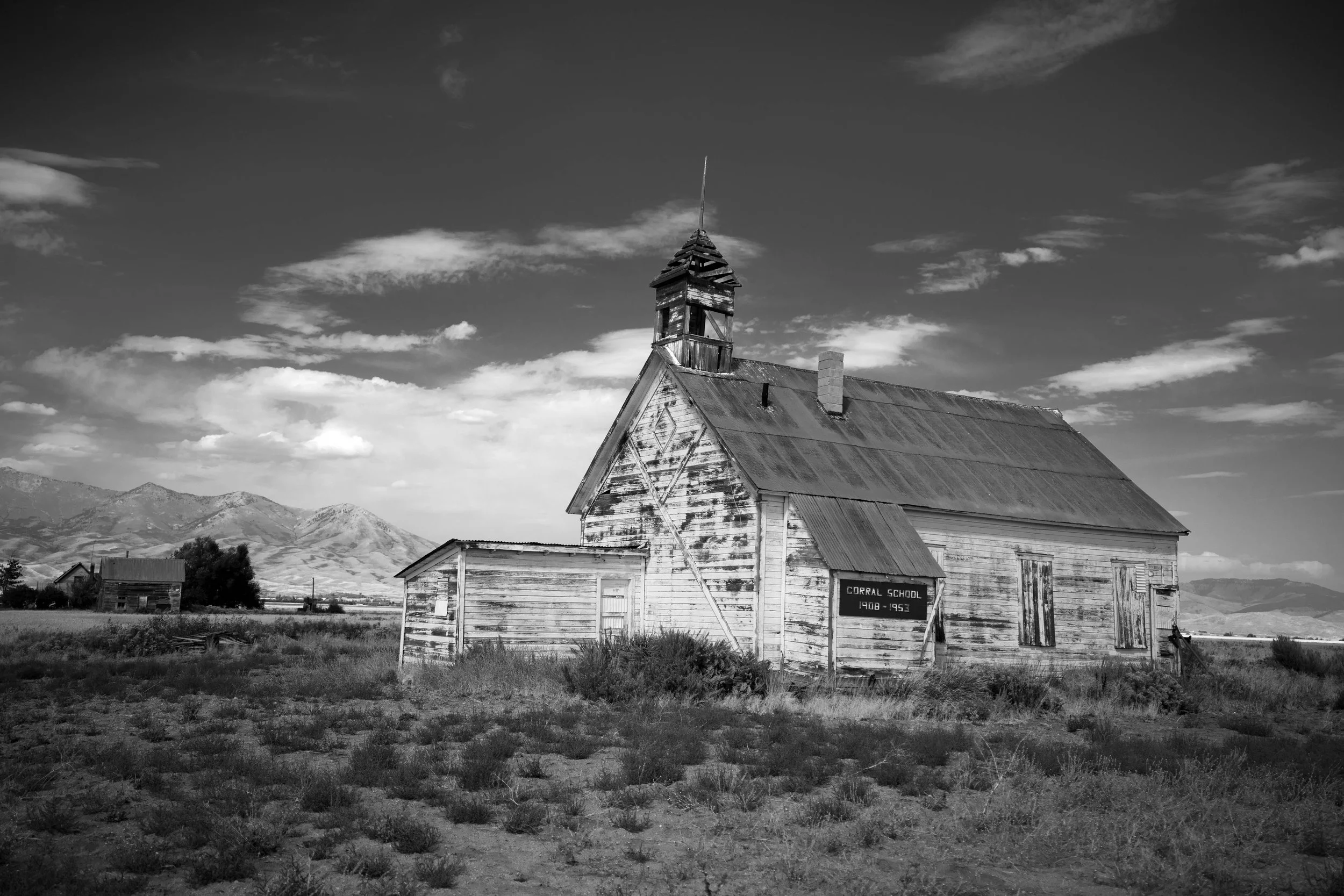
The Corral Schoolhouse, marked by its weathered clapboard and a sign reading 'CORRAL SCHOOL 1908-1953,' stands as a solitary monument in the Idaho highlands.
Its silhouette, framed by distant mountains and a sky streaked with clouds, holds the quiet weight of a community that once gathered here, now softened by time and the vastness of the land.
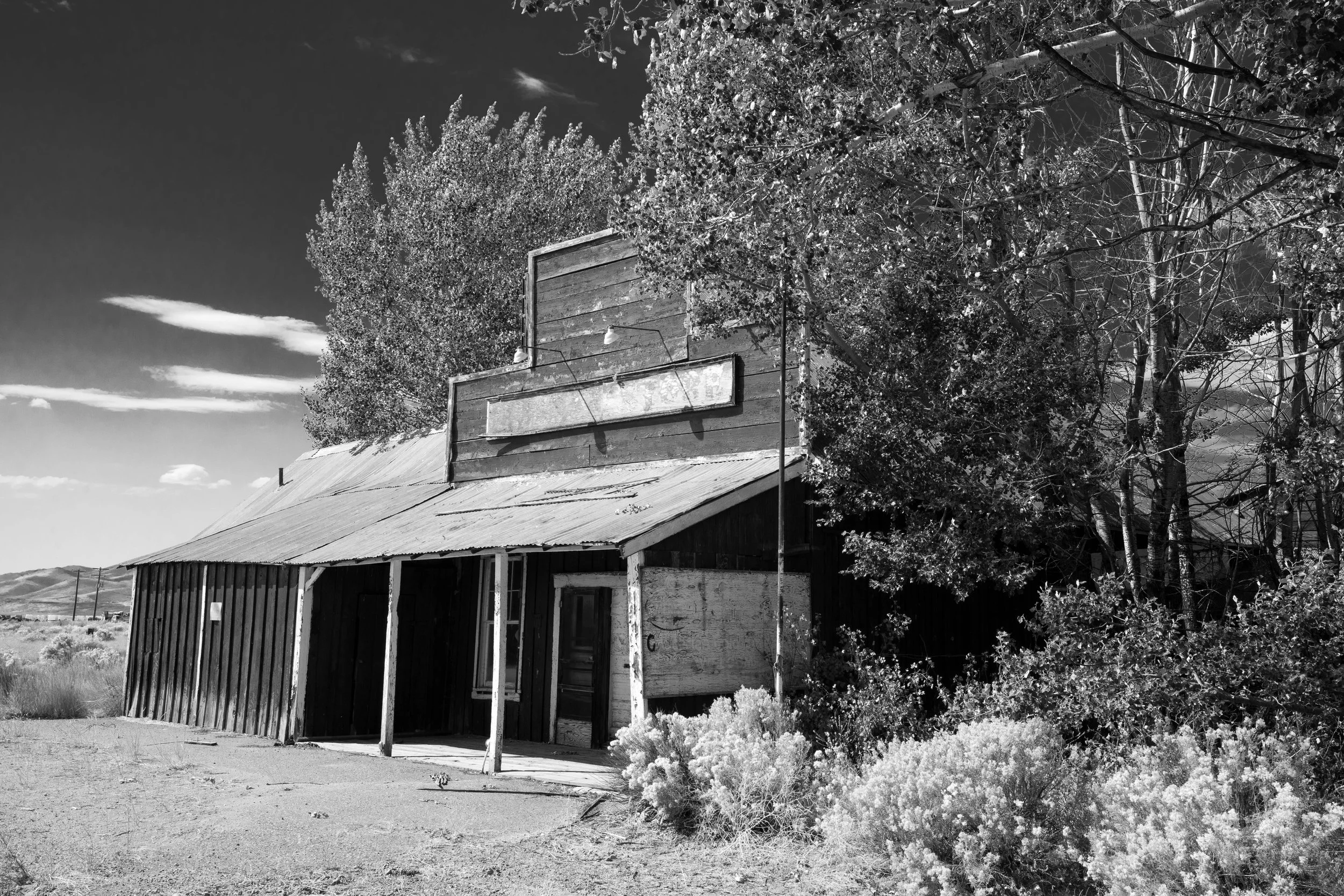
The false-front façade of Corral’s former general store stands sentinel under a vast, cloud-streaked sky, its corrugated awning and peeling wood bearing witness to a commerce long silenced.
Stark light carves the textures of rust and grain, while encroaching trees and scrub brush reclaim the space, turning human industry into a landscape of quiet erosion.
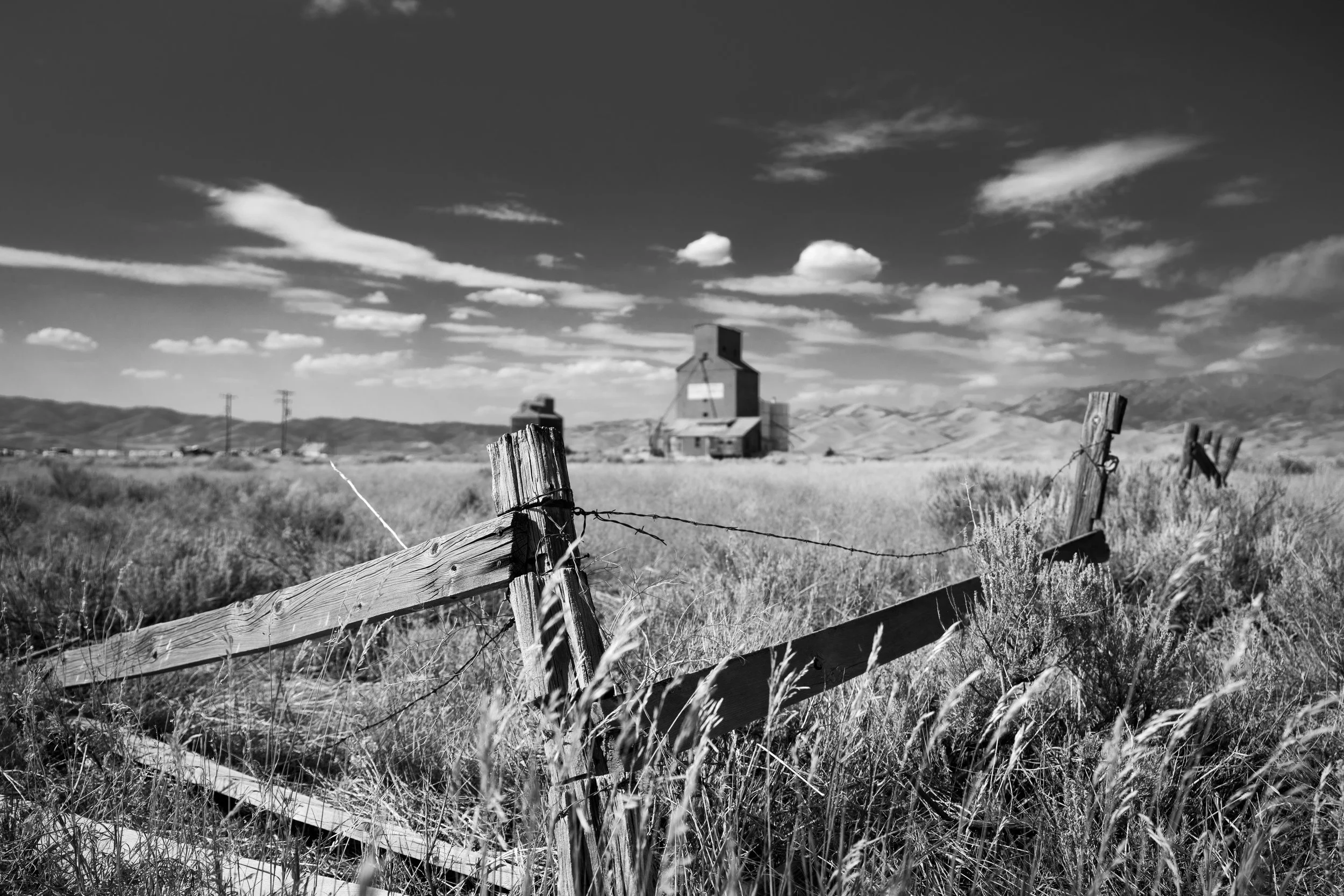
A weathered fence in the foreground frames a distant grain elevator, both structures standing as silent witnesses to a landscape in quiet decay.
The stark black-and-white composition emphasizes texture and form, with the sharp lines of the fence contrasting against the soft, rolling hills and the imposing silhouette of the elevator under a sky streaked with clouds. The image captures a moment of stillness where endurance and abandonment coexist.
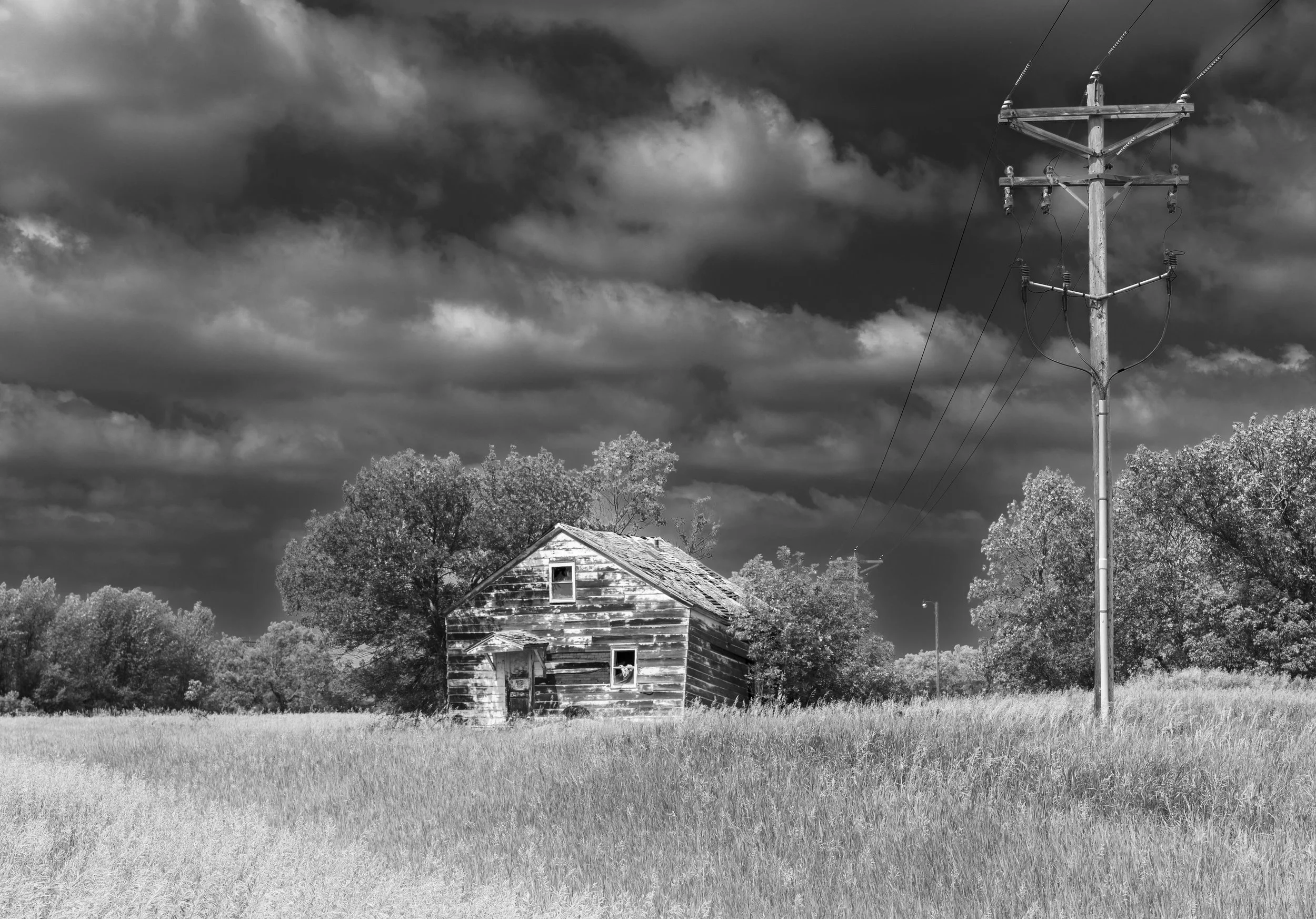
A weathered farmhouse in North Dakota stands solitary in a field of tall grass, its wooden facade stripped by time and elements.
The dramatic, cloud-filled sky casts deep shadows, emphasizing the textures of decay and the quiet resilience of the structure against a vast, indifferent landscape. The composition balances the ruin with the enduring presence of the utility pole, a silent witness to the passage of time.
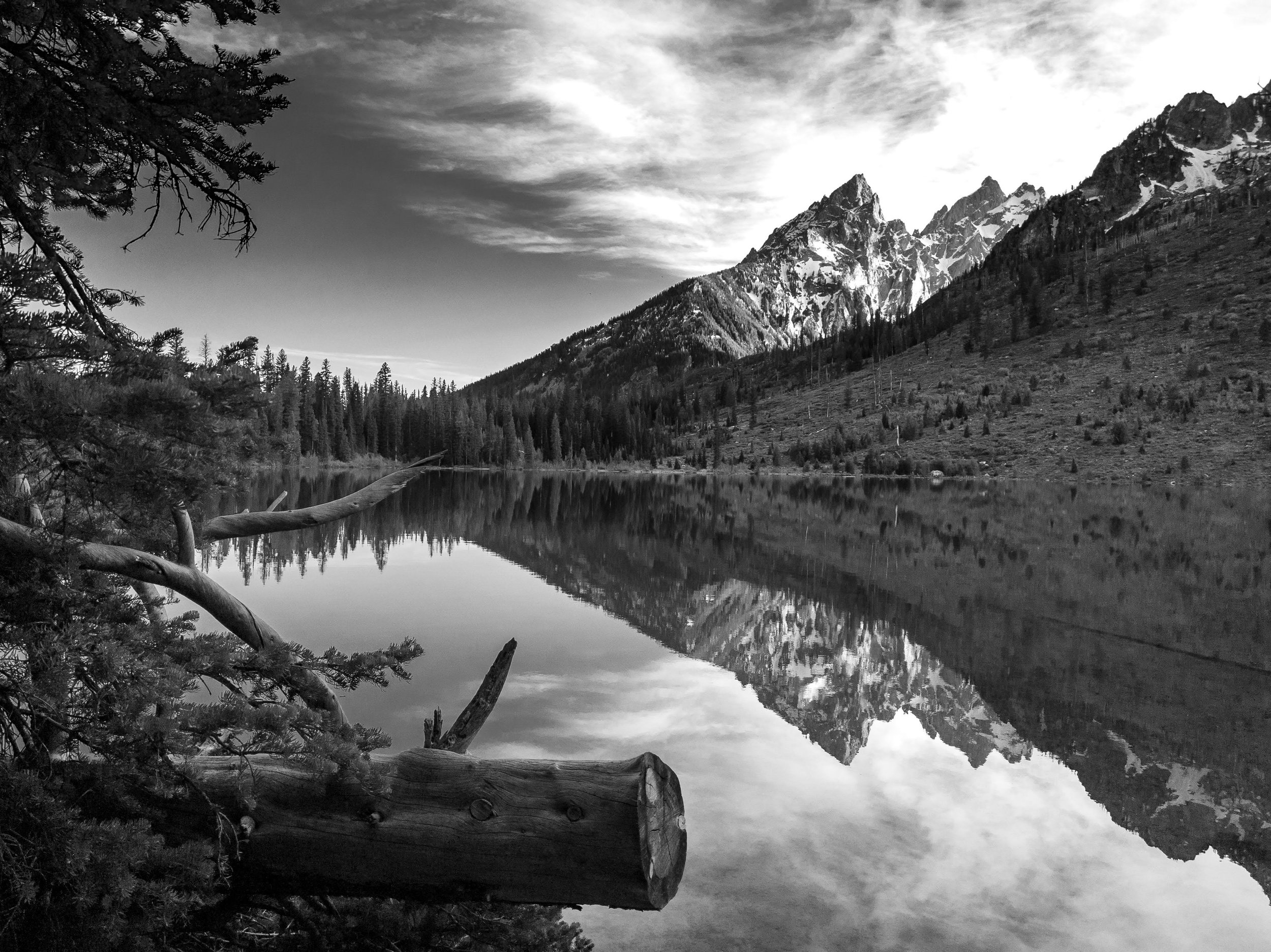
A serene black-and-white composition where the jagged peaks of the Grand Tetons are mirrored perfectly in the glassy surface of String Lake.
Framed by the textured branches of a pine and a fallen log, the scene invites quiet contemplation. The interplay of light and shadow across the mountain’s snow-dusted ridges and the lake’s reflective calm evokes a profound stillness.
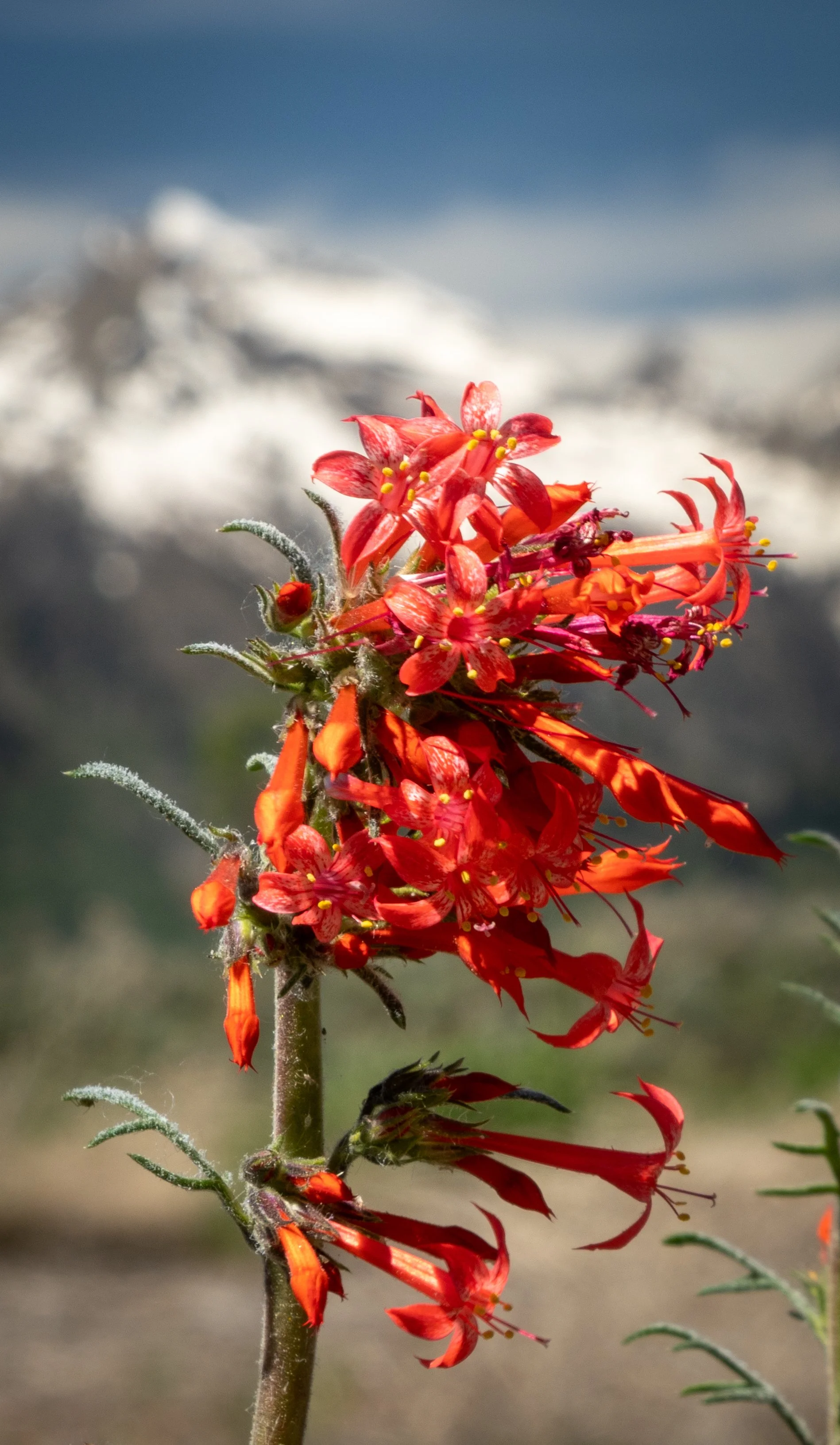
A single stalk of fiery red wildflowers, their petals and pollen-laden stamens rendered in sharp, sunlit detail, stands against a softly blurred alpine expanse.
Behind them, snow-capped peaks dissolve into atmospheric haze, their cool, distant presence offering a quiet counterpoint to the flower’s vibrant, almost incandescent warmth.
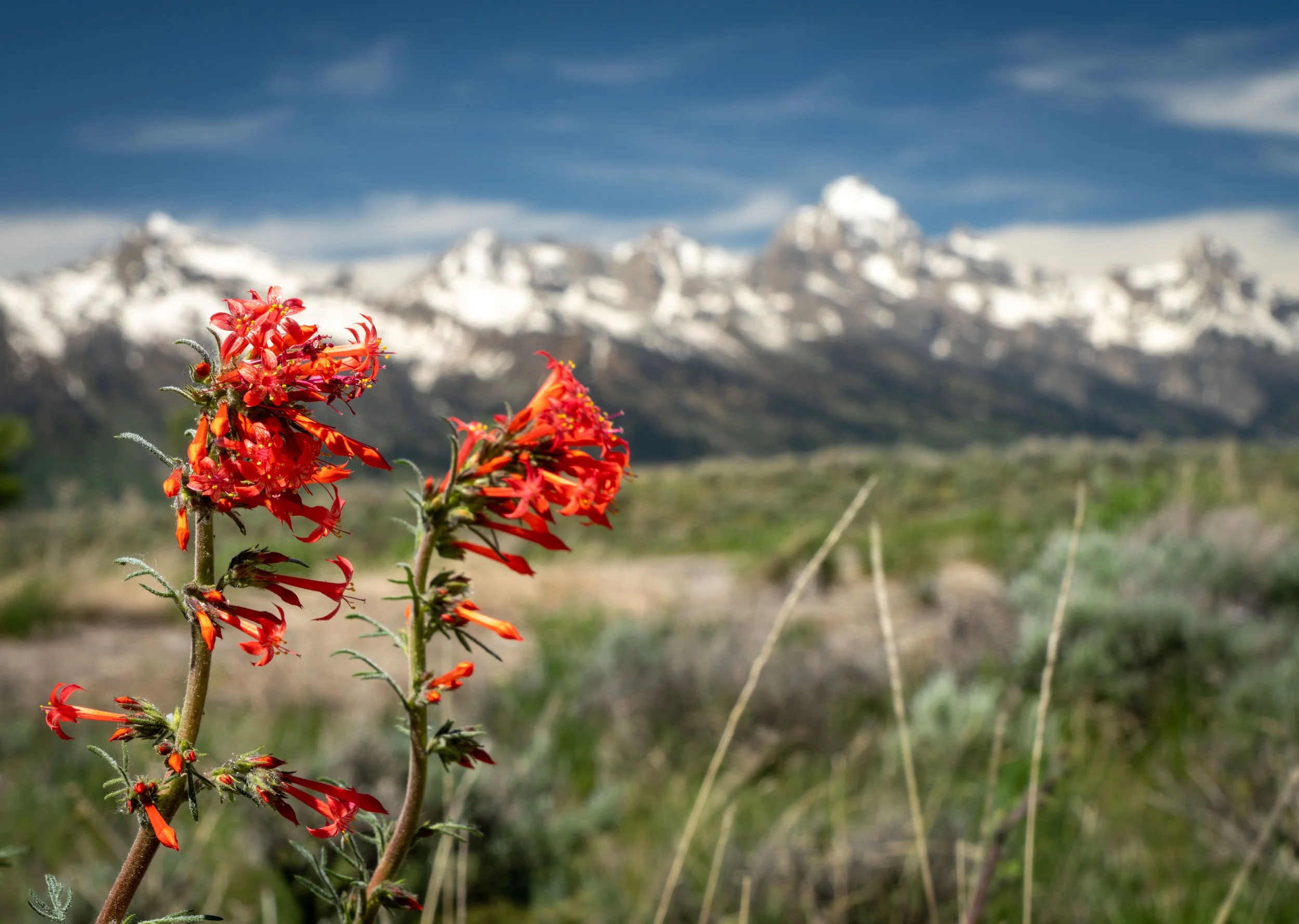
A cluster of fiery red wildflowers stands in sharp, intimate focus, their delicate petals glowing against the vast, softly blurred expanse of the Teton Range.
Behind them, the snow-capped peaks rise with stoic grandeur under a clear blue sky, their scale and stillness rendered in crisp, high-contrast light that underscores the quiet tension between fragile bloom and enduring mountain.
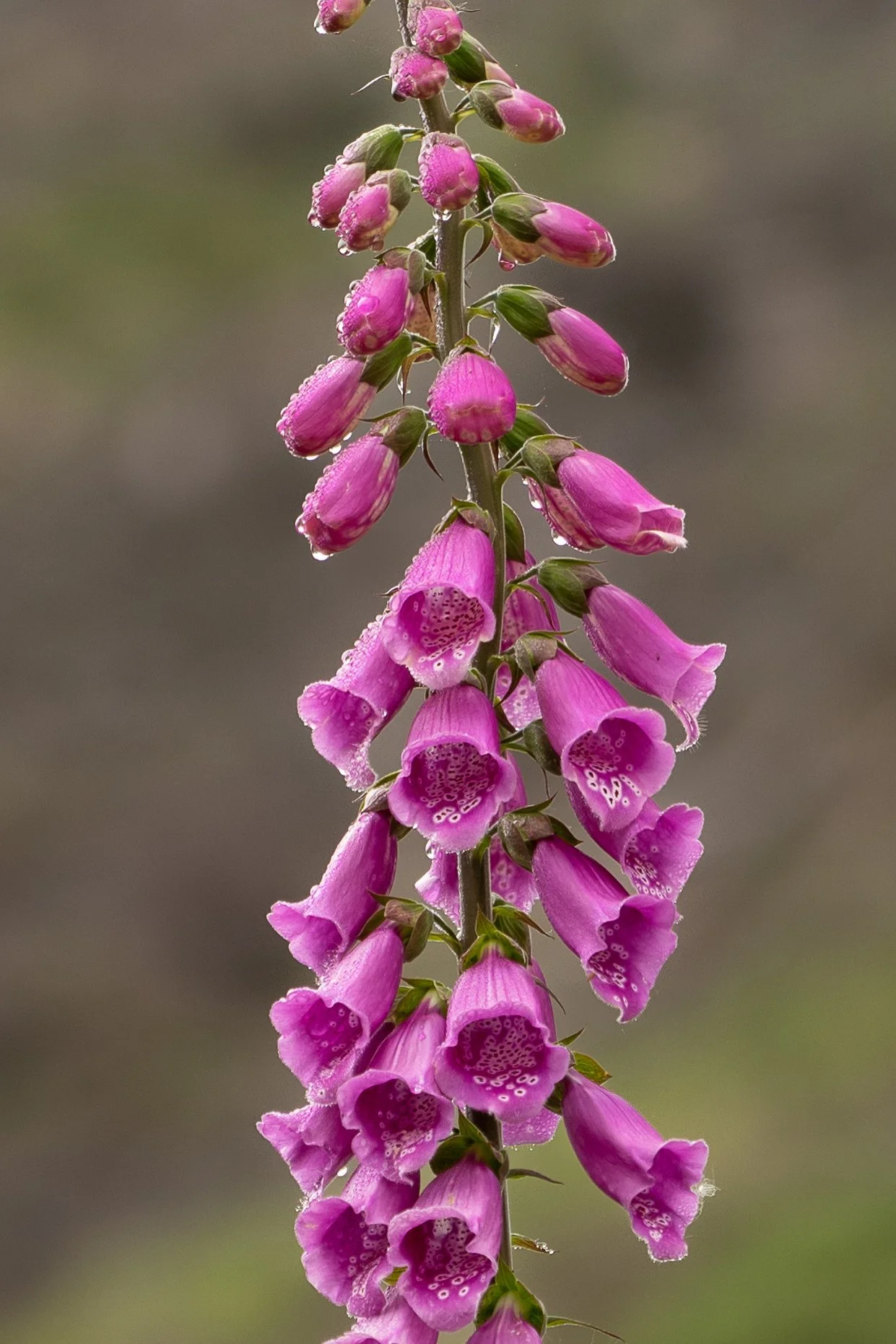
At Mt St Helens, a single foxglove stem rises like a vertical hymn, its bell-shaped blooms jeweled with dew and glowing under the soft, diffused light of morning.
The stillness of the scene holds the weight of early light, each droplet catching the quiet glow as if suspended in the moment before the day’s warmth arrives.
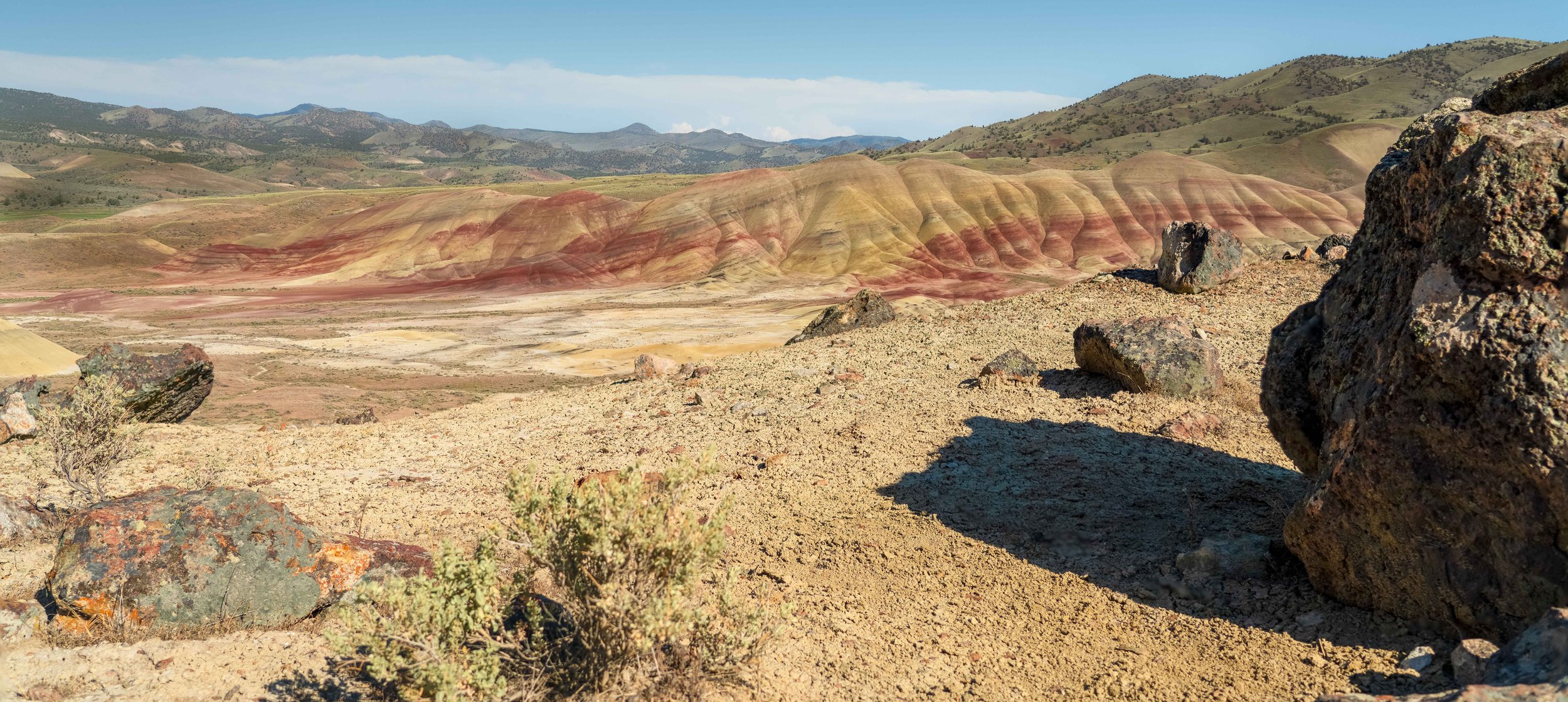
Sunlight glides across the valley’s stratified earth, revealing bands of ochre, rust, and ochre-yellow that ripple like a geological painting across the arid expanse.
The foreground’s textured gravel and weathered boulders cast sharp, quiet shadows, anchoring the viewer’s gaze to the vast, hazy blue hills that recede into the distance, where stillness and scale conspire to evoke the patient grandeur of this desert canvas.
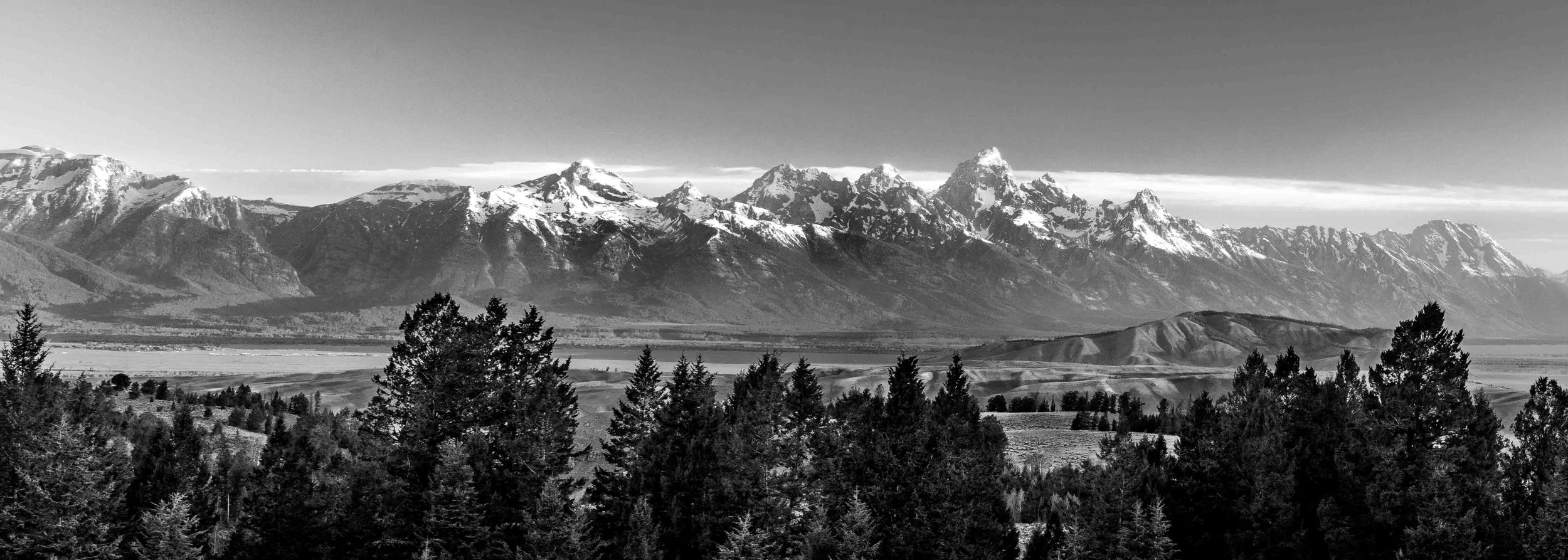
From 8,800 feet on the eastern highlands, the first light of dawn skims the snow-capped ridgelines of the Grand Tetons, casting long, quiet shadows across the valley below.
The foreground’s dense coniferous forest acts as a dark, textured frame, grounding the monumental peaks in stark, timeless contrast — a silent communion between earth and sky.
A cascade of water flows through a verdant forest, its motion softened by time and light.
Moss blankets ancient trees and fallen logs, creating a tapestry of emerald tones that frame the stream’s gentle descent. The composition invites quiet contemplation, where the rhythm of water and the stillness of foliage converge.